Voice Access App: Empowering Users Through Hands-Free Technology
In today’s fast-paced digital world, accessibility and convenience have become essential features of modern technology. One innovation that perfectly reflects this shift is the Voice Access App—a powerful tool that allows users to control their smartphones using only their voice. Designed primarily for people with physical disabilities, the Voice Access App is also becoming increasingly popular among general users who want a quicker, hands-free way to operate their devices.
The Voice Access App uses advanced speech recognition technology to convert spoken commands into actions on the screen. Once activated, users can open apps, scroll pages, type messages, navigate through settings, and even edit text simply by speaking. The app displays numbered labels on different parts of the screen, enabling users to say commands like “Tap 5” or “Scroll down” to perform precise actions without touching the phone.
One of the most important benefits of the Voice Access App is accessibility. For individuals with limited mobility, paralysis, or motor impairments, using a touchscreen can be challenging or impossible. Voice Access removes this barrier by giving users full control through speech alone. It promotes independence, dignity, and equal access to digital services such as messaging, calling, browsing the internet, and using social media.
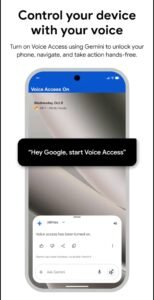
Beyond accessibility, the app also improves convenience and productivity. Drivers can use voice commands to make calls or send messages without taking their hands off the wheel. Busy professionals can dictate emails while multitasking. Students can quickly search information or take notes using voice input. The app transforms the smartphone into a truly hands-free device, saving time and effort.
Another major advantage of the Voice Access App is its accuracy and customization. Modern voice recognition systems are highly precise, even in noisy environments. Users can personalize commands, adjust sensitivity, and choose preferred languages or accents. Many voice access apps also support offline functionality, ensuring smooth performance even without an internet connection.
Security and privacy are also important aspects of the technology. Advanced voice authentication and on-device processing help protect sensitive information. Users remain in control of their data, and most apps offer clear privacy settings to manage permissions and microphone access.
As artificial intelligence continues to evolve, the future of voice access technology looks promising. Developers are working on smarter algorithms, better multilingual support, and deeper integration with smart home devices. Soon, users may be able to control not just their phones, but also lights, appliances, and entire digital ecosystems with a single voice command.
App Link
In conclusion, the Voice Access App represents a major step forward in inclusive and user-friendly technology. By enabling hands-free control, it empowers people with disabilities, increases productivity for everyday users, and redefines how we interact with our devices. As voice technology becomes more intelligent and widespread, voice access apps will play a vital role in shaping a more connected, accessible, and efficient digital future.