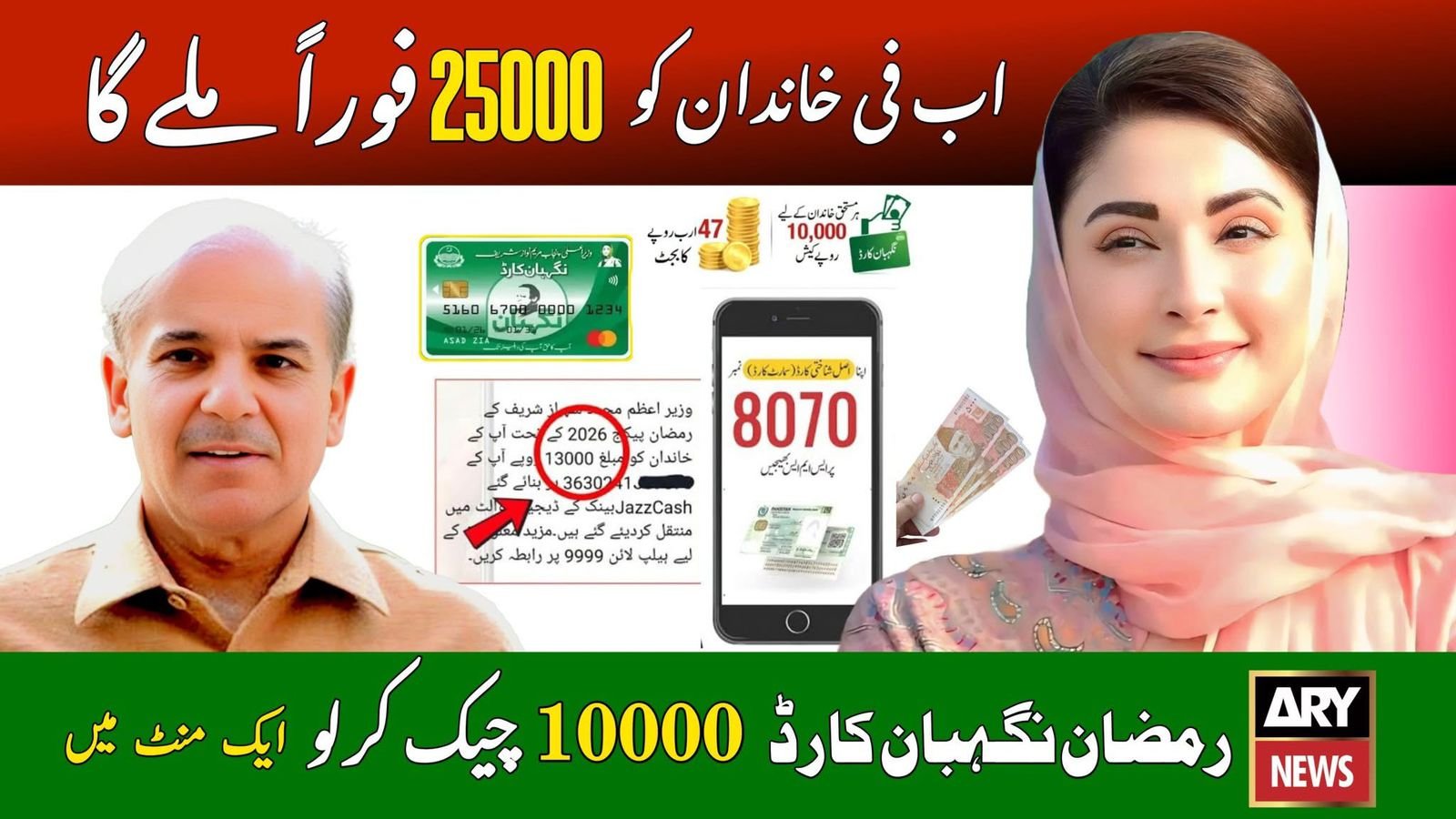
Maryam Nawaz’s Ramzan Package: A Major Relief Initiative During the Holy Month
As the holy month of Ramadan (Ramzan) approaches each year, economic strain on low-income households rises due to increased household expenditures on food, utilities, and essentials. In response, the Government of Punjab, under the leadership of Chief Minister Maryam Nawaz Sharif, has repeatedly unveiled financial support measures for deserving families across the province — the biggest among them being the Ramzan Nigehban Package.
📊 Scale and Scope of the Assistance
The scale of this program reflects a significant mobilization of provincial resources:
- 4.2 million families have reportedly started receiving their Rs 10,000 assistance.
- The program’s estimated cost (Rs 47 billion) makes it one of the most ambitious provincial relief schemes in Punjab’s history.
- Officials confirm that not only traditional beneficiaries like widows and low-income families but also wage earners and even some government workers have benefited from the program.
In one region alone — Faisalabad Division — over 129,000 eligible families had received their Nigehban Cards and funds as part of this rollout, demonstrating the extensive reach of the program.
📈 Why Cash Relief Matters During Ramzan
The importance of Ramadan relief policies like this cannot be overstated:
- Inflationary pressures in Pakistan have led to rising food prices, increasing hardship for low-income households.
- Traditional support mechanisms in the form of food baskets or ration cards sometimes cannot fully compensate for rising household costs.
- Cash enables families to prioritize their own needs — whether buying iftar supplies, ingredients for sehri, paying utility bills, or addressing emergency expenses.
🚨 Challenges and Public Issues
While many families have expressed gratitude for the relief, the program has also faced operational challenges, such as:
⚠️ Corruption and Deduction Complaints
There have been isolated reports of attempts to misappropriate part of the cash relief. In Sargodha, police arrested a person allegedly deducting Rs 1,000 from beneficiaries’ allocated funds, showing that local enforcement is acting against misconduct.
⚠️ Eligibility and Registration Confusion
Even with improved digital and biometric systems, some residents have reported uncertainty about whether their names appeared on the beneficiary lists. For this reason, helplines and local support centers were established to clear up confusion and help people verify eligibility.
These issues highlight how large-scale welfare programs — if not meticulously administered — may still leave room for human error or corruption, requiring active oversight and civic vigilance.
📍 Provincial vs Federal Relief in 2026
While Maryam Nawaz’s Punjab Nigehban Package delivered Rs 10,000 per family within the province, the federal government under Prime Minister Shehbaz Sharif also announced a nationwide Ramadan relief effort in 2026 which provides Rs 13,000 per family across Pakistan to more than 12 million families.
This dual approach — provincial and federal — has enabled families to receive multiple layers of support, offering greater relief amid economic challenges.
🗣️ Public Reaction and Impact
The public response to the Ramzan Nigehban Package has been mixed but largely positive among beneficiaries:
👍 Relief Appreciated by Many
Large numbers of underprivileged families have expressed gratitude for the financial support. For many households, the Rs 10,000 cash relief arrives at a critical time, offsetting part of the increased expenses associated with Ramadan.
📉 Economic Sense for Households
For struggling families, small increases in daily income during Ramadan can translate into meals for children, essential medicines, or last-minute preparations for Eid.
App Link
🤔 Political Discussion
Critics argue that such cash packages may be politically motivated and that long-term economic reforms are needed alongside short-term relief — a recurring debate in Pakistan’s public discourse on welfare and governance.
🔍 Conclusion
The Ramzan Nigehban Package, led by Maryam Nawaz Sharif as Chief Minister of Punjab, represents one of the most expansive provincial relief programs designed to support low-income and deserving families during Ramadan. With Rs 10,000 cash transfers, subsidies on essential goods, modern payment systems, and a network of Sahulat Bazaars, the initiative aims to bring both financial and social relief to households in a time of need.
While operational challenges and debates persist — as with any large-scale public welfare effort — the program’s scale and its integration with federal relief measures reflect a strong governmental focus on social support during a period of high living costs.
For many families in Punjab and beyond, the Ramzan relief schemes continue to provide meaningful support during one of the most important months in the Islamic calendar.