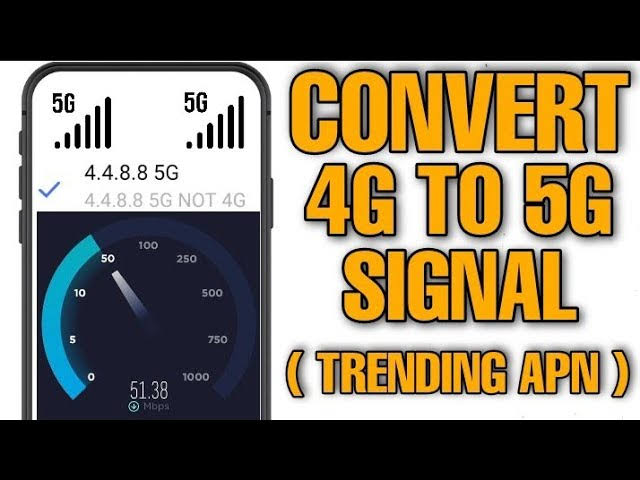
Convert Your Any Mobile 4G internet into 5G internet
The transition from 4G to 5G internet represents one of the most significant advancements in mobile communication technology. As the demand for faster internet speeds, lower latency, and greater network capacity continues to grow, 5G has emerged as the next generation of wireless connectivity. It is designed to improve the way people communicate, work, and access digital services in an increasingly connected world.
What is 4G?
4G, or fourth-generation mobile network technology, was introduced to provide faster internet speeds and better connectivity compared to 3G networks. It enabled users to stream high-definition videos, make video calls, browse websites quickly, and use mobile applications more efficiently. With average download speeds ranging from 10 Mbps to 100 Mbps, 4G transformed mobile internet usage and became the global standard for smartphones and mobile devices.
Despite its success, 4G networks have limitations. As more devices connect to the internet and data consumption increases, network congestion can occur, resulting in slower speeds and reduced performance. This challenge led to the development of 5G technology.
What is 5G?
5G stands for fifth-generation wireless technology. It is designed to deliver faster speeds, lower latency, and improved network reliability. Unlike previous generations, 5G is not only focused on smartphones but also supports a wide range of connected devices, including smart homes, autonomous vehicles, industrial machines, and Internet of Things (IoT) devices.
The primary goal of 5G is to create a more connected and intelligent digital environment where devices can communicate almost instantly.
Key Differences Between 4G and 5G
1. Speed
One of the most noticeable improvements in 5G is internet speed. While 4G typically offers speeds between 10 Mbps and 100 Mbps, 5G can provide speeds exceeding 1 Gbps under ideal conditions. This means users can download large files, stream 4K and 8K videos, and access cloud services much faster.
2. Lower Latency
Latency refers to the delay between sending and receiving data. 4G networks generally have latency levels of around 30 to 50 milliseconds. In contrast, 5G can reduce latency to as low as 1 millisecond. This improvement is crucial for online gaming, virtual reality, remote surgery, and autonomous driving systems.
3. Increased Capacity
5G networks can support a much larger number of connected devices compared to 4G. This capability is important as smart cities, IoT devices, and connected technologies continue to expand worldwide.
4. Better Reliability
5G provides more stable connections, especially in crowded areas such as stadiums, airports, and shopping centers. Users can experience consistent internet performance even when many people are connected to the same network.
App Link
Benefits of 5G Technology
The introduction of 5G offers numerous benefits for individuals and businesses. Faster internet speeds improve productivity and enhance digital experiences. Businesses can use advanced technologies such as artificial intelligence, cloud computing, and automation more effectively. Smart cities can benefit from improved traffic management, energy efficiency, and public safety systems.
In healthcare, 5G enables real-time monitoring, telemedicine, and advanced medical procedures. In education, students can access interactive learning experiences through virtual and augmented reality platforms.
Challenges of the 5G Transition
Although 5G offers many advantages, its deployment faces several challenges. Building 5G infrastructure requires significant investment in new towers, equipment, and network upgrades. Coverage may initially be limited in rural areas, and some users may need compatible devices to access 5G services.
Conclusion
The shift from 4G to 5G marks a major milestone in the evolution of internet technology. With faster speeds, lower latency, increased capacity, and greater reliability, 5G has the potential to transform industries and improve daily life. As networks continue to expand globally, 5G will play a vital role in shaping the future of communication, innovation, and digital connectivity.